Fitting & Form
What the Tailor Sees
Measurements describe a body in numbers. Much of what makes a suit fit lies in what the numbers leave out.
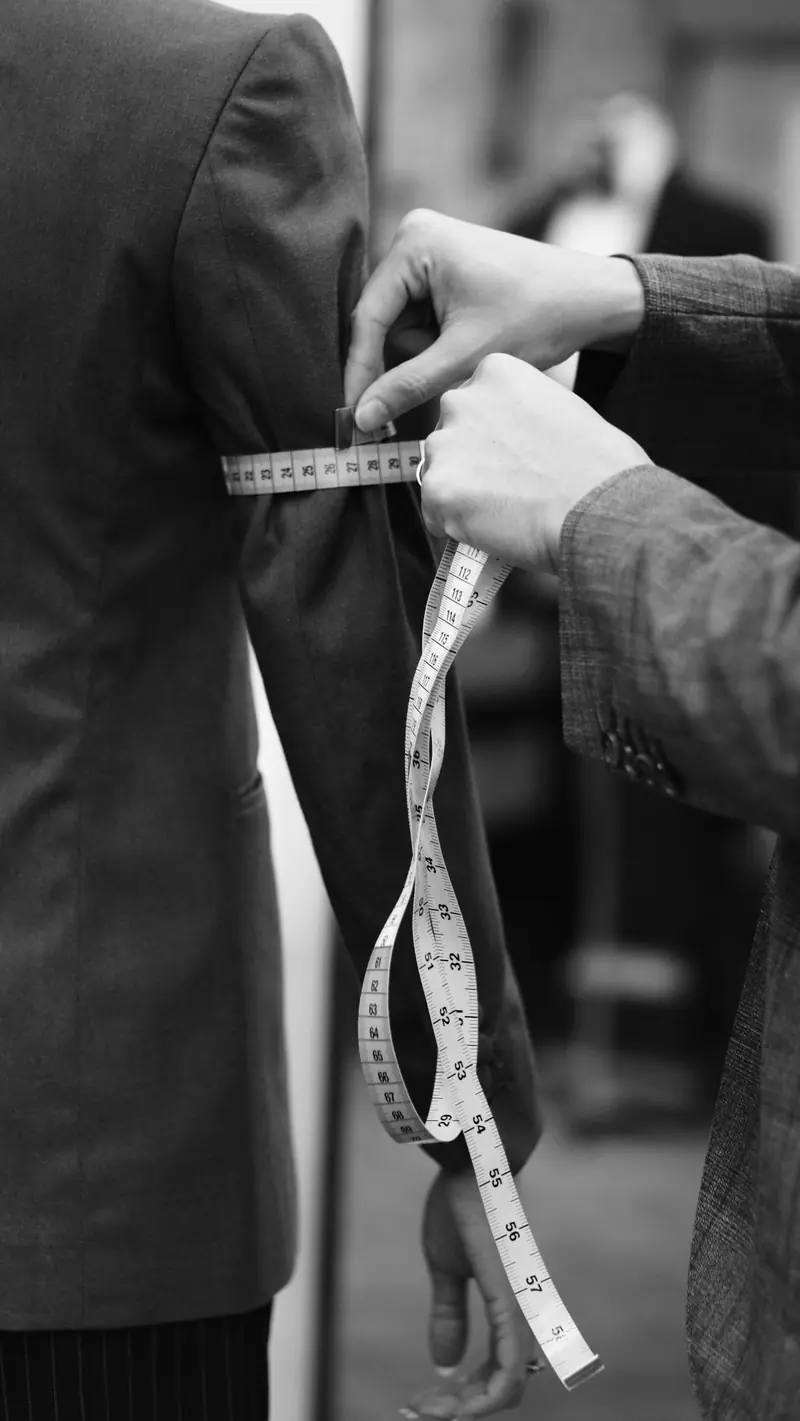
Beyond the tape measure
A detailed set of measurements is essential. But two people can share a set of measurements and still need different garments, because they stand, carry their weight and move differently. That is why your cutter also studies your posture and stance — how you prefer to stand, sit and move.
Posture
Some people stand very upright; others lean slightly forward, or carry one shoulder a little lower than the other. None of this is a fault to be corrected. It is simply how a particular body stands, and a garment made for that body should take it into account rather than work against it.
Stance and balance
Balance describes how a jacket hangs from the shoulders, front to back. When it is right, the fronts fall cleanly and the back sits close without pulling. When it is not, a jacket can be the right size and still look as if it belongs to someone else. Balance follows your stance — the way you actually stand, not an ideal one.
Movement
A suit is not worn standing still. The tailor watches what happens when you reach, turn and sit: where the cloth gathers, where it pulls, where it needs a little more room. Ease in movement and a clean line at rest have to be found together.
Between garment and body
Fitting is less about the garment alone than about the relationship between the garment and the person in it. The tailor studies it on your body at each fitting until the silhouette settles balanced and natural. The First Fitting describes where that work begins.
So the garment does not have to
The tailor observes many things so that the finished garment does not need to call attention to them. When the work is done well, no one notices the lower shoulder or the forward stance. They notice that the suit looks at ease — and so does the person wearing it.